Syria’s Fuel Shock: Is It the First Major Economic Test for the New State?
That challenge has come sharply into focus with the government’s latest increase in fuel prices.
News Desk•15 September 2026
Nearly two years after the fall of Bashar al-Assad, Syria is confronting a challenge fundamentally different from the battles that shaped its transition: how to turn political change into a tangible improvement in the lives of millions of Syrians.
That challenge has come sharply into focus with the government’s latest increase in fuel prices.
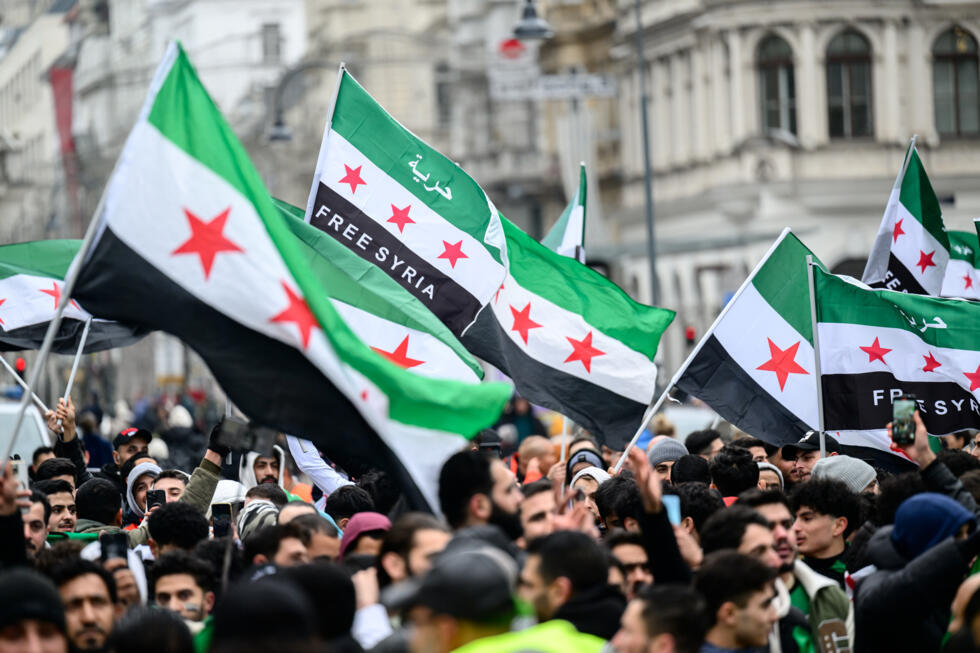
Diesel prices rose by 40 percent, while gasoline increased by roughly 26 to 28 percent, triggering demonstrations across several Syrian provinces. Protesters blocked roads and burned tires in parts of Aleppo, Idlib, Raqqa, Hasakah and Deir ez-Zor, among other areas, in what Reuters described as the most widespread protests since Assad’s fall.
The significance of these demonstrations goes beyond the price of a liter of fuel.
They expose one of the central dilemmas facing the new Syrian state: the government has inherited an economy devastated by more than a decade of war, corruption, sanctions and institutional decay, but Syrians who endured those years understandably have little capacity left to absorb another economic shock.
Why did fuel prices rise?
The government says the increase is temporary and largely the result of circumstances beyond its immediate control.
According to the Ministry of Energy, Syria is facing exceptionally high international petroleum prices, increased transportation and insurance costs and reduced domestic refining capacity because of an extensive overhaul of the Baniyas refinery.
Syria also remains heavily dependent on foreign energy supplies. The country currently imports roughly two-thirds of the energy it consumes, leaving domestic prices exposed to movements in international markets and disruptions in regional supply chains.
The new official prices put 95-octane gasoline at 195 Syrian pounds per liter, 90-octane gasoline at 185 pounds and diesel at 175 pounds.
Those explanations matter. Syria does not operate in an economic vacuum, and the government cannot indefinitely sell imported energy for substantially less than it costs to purchase and transport.
But economic logic alone does not make the consequences easier for Syrian households.
Fuel in Syria is not simply another commodity.
It determines the price of transportation, agriculture, electricity generation, manufacturing and the movement of almost every product from farms and factories to markets.
Within hours of the latest increase, transportation costs were already rising in some Syrian cities.
A fuel shock therefore rapidly becomes a food-price shock, a transportation shock and ultimately a household-income shock.
For millions of Syrians, that is where the government's economic argument collides with everyday reality.
An economy recovering on paper
There is an apparent contradiction at the heart of Syria’s economy. International institutions increasingly see signs of recovery.
The International Monetary Fund said after a mission to Damascus in July that Syria’s economic recovery was accelerating and projected double-digit growth in 2026, followed by continued strong growth in 2027.
Agriculture has benefited from improved rainfall. Hydrocarbon production and electricity provision are expanding. Trade and services are recovering, refugees are returning, visitors are increasing and Syria is gradually reconnecting with regional and international markets.
The World Bank has similarly pointed to improved external connectivity, rising investment, greater oil and gas production and the effects of sanctions relief.
These are significant changes for a country whose economy spent more than a decade being hollowed out.
But GDP growth is not the same thing as household recovery.
The IMF itself acknowledges that poverty remains widespread and that growth has been uneven across the country. Inflation has also accelerated during 2026, driven partly by higher fuel and food import costs, housing expenses and stronger domestic demand.
That distinction explains much of the frustration visible on Syrian streets. The economy may be recovering. Many Syrians are not yet feeling the recovery.
Assad's economic inheritance
Any serious assessment of the current crisis must begin with what the new authorities inherited. The Assad regime did not leave behind a functioning economy temporarily disrupted by political change.
It left behind a country economically exhausted by nearly 14 years of war, mass displacement, destruction and systematic corruption.
Industrial infrastructure was damaged or destroyed. Electricity generation deteriorated. Agricultural production collapsed in parts of the country. Investment disappeared. Millions of skilled Syrians left the country.
Meanwhile, regime-connected businessmen and networks accumulated enormous influence over what remained of the economy, while the state increasingly depended on illicit and informal economic structures.
By the time Assad fell in December 2024, the economic foundations of the Syrian state had already been profoundly weakened.
Reversing that destruction was never going to happen in two years.
Sanctions relief, foreign investment and international recognition can remove obstacles to recovery, but they cannot instantly reconstruct power stations, restore factories, modernize banks or create hundreds of thousands of productive jobs.
That is the reality confronting President Ahmed al-Sharaa's government. Yet it cannot become a permanent explanation for every economic hardship. The political transition ultimately has to be judged not only by what it inherited, but by what it does with that inheritance.
Protest is not necessarily a threat to the new Syria
There is another reason the fuel demonstrations matter. For decades, public protest against government policy in Syria could carry extraordinary personal risk.
Under Assad, criticism of the authorities could lead to arrest, disappearance, torture or worse. The revolution that began in 2011 was itself sparked by a political system incapable of tolerating peaceful dissent.
The sight of Syrians openly protesting an economic decision by the new government should therefore not automatically be interpreted as evidence of instability.
There is another way to read it. Syrians are behaving like citizens. They are demanding explanations from public officials. They are challenging policies that affect their livelihoods. Some are demanding the resignation of an energy minister rather than the destruction of the political system itself.
The government's response to that criticism may therefore prove more important than the demonstrations themselves. One encouraging institutional response has already emerged.
The People's Assembly has approved a hearing with Energy Minister Mohammad al-Bashir to question him over the increases and the circumstances behind the government's pricing decision.
Such accountability should become routine rather than exceptional. The difference between the state Syria is attempting to construct and the regime it overthrew should be visible precisely at moments like this.
The government has a communication problem
There is nevertheless a legitimate policy question surrounding the scale and timing of the increases. The latest rise came only days after another increase earlier in September.
According to ACLED, diesel jumped from 125 to 175 Syrian pounds per liter on September 13, while gasoline increased by roughly 26 to 28 percent. The organization recorded 36 demonstrations against the increase on that day alone.
Even when an increase is economically unavoidable, imposing a large adjustment on a population with extremely limited purchasing power carries serious social consequences.
The government therefore needs more than an explanation of international oil markets. It needs a social policy. If higher prices are temporary, Syrians should be told what conditions would allow them to fall again.
If the Baniyas refinery overhaul is a major cause, the government should provide greater transparency about its expected return to capacity.
If subsidies are financially unsustainable, Damascus needs to explain what mechanism will protect low-income families, public transportation, farmers and other sectors especially vulnerable to fuel costs.
And if international energy prices fall, Syrians should see those savings reflected domestically.
Economic reform requires public trust. Trust requires transparency.
The bigger question: who carries the cost of reconstruction? This debate will not end with fuel. Syria needs enormous amounts of capital to reconstruct its electricity network, roads, schools, hospitals, housing, water infrastructure and industrial base. Someone will have to pay for that reconstruction.
The state cannot finance everything. Foreign donors will not finance everything. Investors will expect returns. Public utilities eventually need sustainable business models.
That means difficult decisions are unavoidable. But the distribution of those costs will become one of the defining political questions of post-Assad Syria.
Ordinary Syrians cannot continually be asked to absorb price increases while watching wealth accumulate elsewhere.
The government must demonstrate that economic reform does not mean transferring the cost of rebuilding the country disproportionately onto people who survived the destruction of the previous era.
That requires stronger oversight of public contracts, transparent government spending, protection for vulnerable households, competition rather than monopolies and serious action against corruption wherever it appears.
Syria does not need another economic elite whose access to political power determines access to wealth. One of the lessons of the Assad era should be precisely the opposite.
A test rather than a crisis of legitimacy
The protests should therefore be understood for what they are: a warning about economic pressure, not necessarily a rejection of Syria's political transition. There remains substantial reason for economic optimism.
Syria has re-entered international financial institutions. Sanctions have been substantially dismantled. Oil and gas production has expanded. International companies are exploring opportunities. Refugees are returning. Electricity provision has improved in many areas.
The IMF expects strong growth. But statistics cannot substitute for lived experience. For the Syrian family calculating whether wages will cover food, transportation, electricity and rent until the end of the month, projections for next year's GDP mean little. That is the challenge now facing Damascus.
The revolution removed a regime that had made accountability virtually impossible. The new state will be judged by whether it builds something fundamentally different.
That does not require a government that never makes unpopular decisions. It requires a government capable of explaining those decisions, accepting scrutiny, correcting mistakes and ensuring that economic reform ultimately serves the population rather than merely improving the state's balance sheet.
Syria's fuel crisis is therefore about much more than fuel. It is an early test of the relationship between Syrians and the state they are trying to rebuild.
And unlike under Assad, Syrians can now freely have a voice in how that state is governed.